Why it’s good news that more Americans are renting rather than buying homes. Via Slate. Good for #Multifamily
Filed under: Multifamily Investments, The Economy and Current Affairs
Exec Sum:
The American economy is making a significant shift from buying to renting, and that may ultimately be good news. According to a USA Today analysis of Census data released this weekend, since 2006, the number of households that rent has grown by about 700,000 a year, while the number of households that own has fallen by about 200,000 a year.
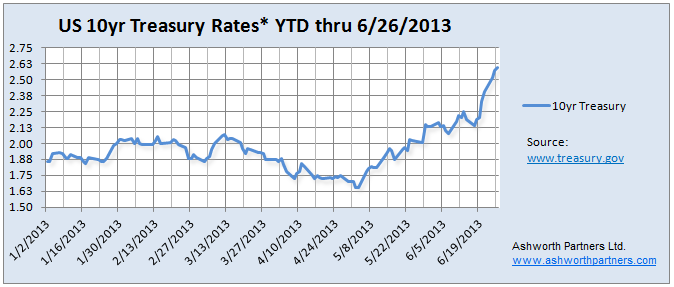
[R]enting is better than owning for many Americans. Indeed, dozens of recent studies have shown that, excepting the go-go bubble years, houses tend not to make very good investments at all: A prospective homebuyer would have made more money taking her down payment, parking it in inflation-adjusted Treasury bonds, and renting.
But it is conclusive: Not everyone should own a home. The recession has helped erode the stigma against renting, with about 70 percent of Americans now admitting that it has advantages over buying a house. If people are making unsentimental decisions about whether homeownership is really worth it for them, that is at least one small benefit of the housing bubble bursting.
See the whole article with links to reports and surveys here: The Rent Isn’t Too Damn High
Is a Gold Standard the Answer to Our Monetary Crack-Up?
My brother Tom shared an article from the Cato Institute entitled: “Why Gold-Defined Money Is the Answer to Our Monetary Crack-Up”. 
I agree with the writer in theory but as Yogi Berra said: In theory, there is no difference between theory and practice. In practice, there is. A couple points:
With a fixed currency like a gold standard innovation and value creation that grows the economy will be constrained and what growth does occur will cause prices to fall, hurting the producers of goods and limiting real returns to their investors. There has to be some mechanism to grow money supply at the approximate rate of real growth in the economy.
The real problems we’re facing around the world are from excess leverage and at the end of every debt binge the unwinding happens in three ways. Debt creation can be reduced and austerity can be imposed to make room for Read more
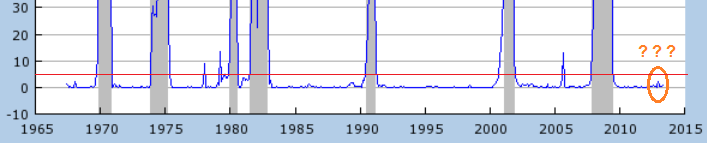
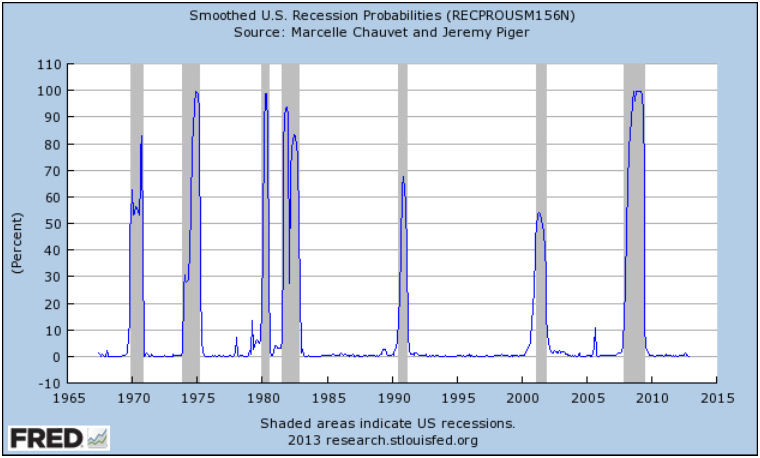
Leading Indicators and the Risk of a Blindside Recession. In-depth on economic indicators from John Hussman
Over the past few weeks, investors used to setting their economic expectations based on a “stream of anecdotes” approach have seen their economic views evolve roughly as follows:
“After a brief ‘scare’ during the third quarter, economic reports have come in better than expectations for weeks – a sign that the economy is on a gradual but predictable growth path; Purchasing managers reports out of China and Europe have firmed, and the U.S. Purchasing Managers Indices have advanced, albeit in the low 50′s, but confirming a favorable positive trend, and indicating that the U.S. is strong enough to pull the global economy back to a growth path, or at least sidestep any downturn…”
“Unfortunately, in all of these cases, the inference being drawn from these data points is not supported by the data set of economic evidence that is presently available, which is instead historically associated with a much more difficult outcome. Specifically, the data set continues to imply a nearly immediate global economic downturn… Frankly, I’ll be surprised if the U.S. gets through the first quarter without a downturn.” (Underlining mine)
Definitely worth a careful read: http://bit.ly/ArTDyK John Hussman is a value investor and a serious student of the economy, we may not always agree with him but we should not dismiss his research.
Is the credit crisis the disease or the symptom?
I am running a friend’s campaign for city council so I’ve been talking to a lot of people the last few months. Most of the conversations have been about our home town of Bellevue WA and the local issues the city is facing but I’ve also had a number of conversations about the economy, real estate and the credit markets. The majority of the people, many of whom are developers, property/asset managers or owners, are searching for the turn in the cycle and are looking forward to the opportunities that will arise when things return to normal.
I too am looking forward to the upswing in the real estate cycle but I’m not sure that back to ‘normal’ is where we headed. I believe for the last two decades we have been and are living in the ultimate payoff of the Marshall Plan and its siblings. We have successfully avoided a third world war by creating market based economies where enemies might have arisen. This is an entirely positive outcome and surprising to me, a child of the cold war era. Read more
Why buy Multifamily in ’09?
Filed under: Multifamily Investments, The Economy and Current Affairs, Value Investor's Guide to Apartment Buildings
As I sit here looking out at the snow while I’m taking time to review and update my goals for the year there are stars aligning to make the new year a positive one. Especially if you are looking for alternatives for your investment and retirement money. The stock market hasn’t been good to us (I look at my account statement from between my fingers!) and the prognosis for the next year or two isn’t much better.
In contrast there are a number of reasons to consider owning multifamily properties, specifically apartment complexes with more than 100 units. Before I go into the reasons why now is a good time let me first be clear about what I’m NOT recommending, the landlording business. The reason to focus on properties with more than 100 units is that they are large enough to support both professional management and professional maintenance; most likely having both onsite full time if not living there. As an owner of this type of property your job is to review the management reports and manage the managers, not unclog toilets or take phone calls from tenants. Read more
The Bank Bailout Trap
We’ve cornered ourselves trying to bail out the “Too Big To Fail” banks. In trying to keep them alive in the name of saving the financial system we’ve been pumping them full of our childrens’ tax dollars to little effect and we wonder why they’re not really lending. The downward spiral of their balance sheets from both toxic assets and falling stock price continues but how to stop that spiral is being debated hotly in boardrooms, financial markets and congress.
What’s preventing a solution from emerging is the “Too Big To Fail” trap. Until we recognize that these banks have already failed and we are throwing good money after bad we will continue pouring money down a bottomless hole. It’s like lending ‘grocery money’ to a junkie. We can’t allow ourselves to be held hostage by a handful of big banks. Read more
“Those who fail to learn from history…
…are doomed to repeat it”. Winston Churchill’s advice is very timely because it seems like 60 years is about as long as we can go before having to RE-learn the important lessons from The Depression.
The repeal of the The Banking Act of 1933 (AKA The Glass-Steagall Act) in 1999 was the beginning of the failure that ultimately led us to where we are now. One of the big lessons that the Crash and Depression taught us was that banks who took deposits and made loans should be separated from investment houses so that problems on Wall St. wouldn’t wipe out the whole financial system. When we unlearned the lesson in ’99 the banks and Wall St. had a heyday of buying each other up in a rush to create ‘financial super markets’. The idea was that once you came in to deposit your paycheck, they could sell you a few stocks, bonds, mutual funds and even some insurance.
Eventually we ended up with a couple of these huge financial institutions and the smaller regional players followed suite, merging and buying each other up to get big enough to stay competitive with the giants. Those from the Northwest may remember when Washington Mutual was a regional savings bank in the Puget Sound area and ran ads saying that they were your friendly local bank and would never do the bad things that the huge evil banks do. Read more
5 signs we’re not heading into Depression 2.0
In a series of emails with Vince Farrell, CIO of Soleill Securities we were discussing his comments on CNBC about the contrast between 1929 and now. His point was that the policy decisions being made now are the correct ones and that there are a number of protections in place, as a result of the depression, that will prevent this recession from becoming a depression.
Briefly here are Vince’s points that are both necessary steps to preventing depression and signs of hope for the future:
On World Trade-
Then: Smoot Hawley Tariffs enacted, result, world trade falls by two-thirds (66%!)
Now: During the last G7 meeting, members agree to “do no harm” in terms of protectionism. Read more