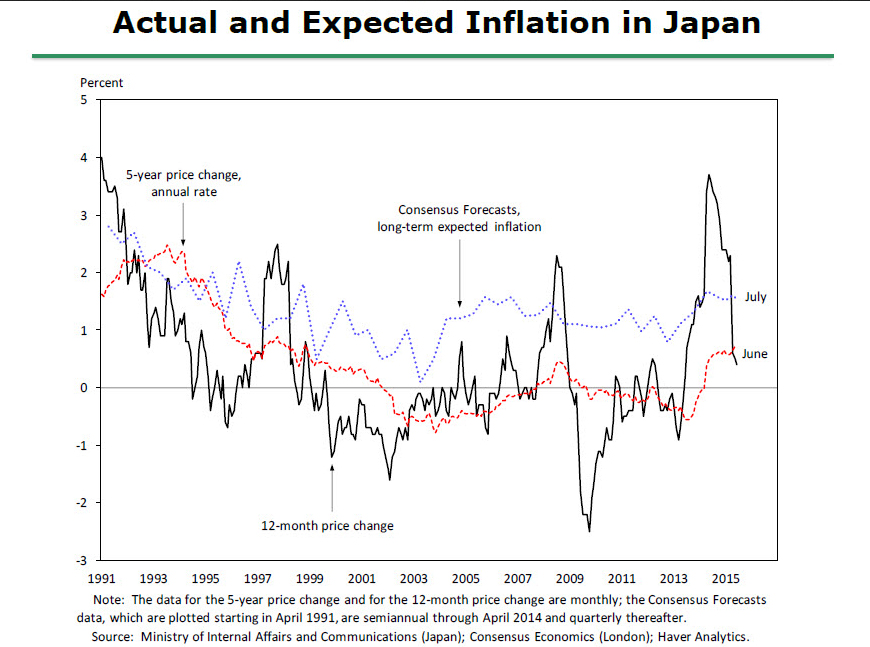
“Here, Japan’s recent history may be instructive: As shown in figure 9, survey measures of longer-term expected inflation in that country remained positive and stable even as that country experienced many years of persistent, mild deflation.” – Janet Yellen Sep. 24, 2015
Was talking about this just last week (again):
As a value guy like you it’s hard to figure out how buying something in the sixes on cap rate works out to be a good deal. But what if the Fed is trapped at the Zero Lower Bound and we are turning Japanese? Their ‘Lost Decade’ is now old enough to graduate with a Master’s degree and we’re following the exact same playbook. I offer last week’s Fed decision as exhibit #1. They would dearly love to raise rates just to prove they can but there’s just thin ice between us and
Most of the economic statistics that we rely on to understand how the economy is doing (and contribute to the apartment building investment cycle) were created in the 1930s and ’40s, smack dab in the middle of the Industrial Age. They haven’t changed much
Click the image to see the thought provoking NYT Magazine article that inspired this post: “The Economy’s Missing Metrics”. Illustration by Andrew Rae
since then, you can find out a lot about woodworking-machine-setters but all web developers are thrown into a single category. Such as they are they were an attempt to measure something that seems quite radical especially coming from economists: Is the government making life better or worse for its citizens? Not how many pairs of shoes were manufactured, how long they sat in warehouses and the average price they sold for.
Are interest rates caught in a Catch-22? What if the Fed is waiting to raise rates until the economy is growing stronger but the economy won’t grow stronger until rates go up?
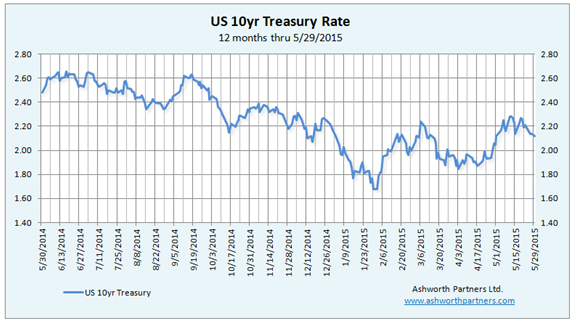
For three years everyone has ‘known’ that interest rates were going up but other than during the Taper Tantrum of June 2013 which affected loan rates more than Treasuries, the T10 only moved up to the 2.75% area which was just picking itself off the floor of 1.66 where it got down to in May that year.
As apartment building investors it’s easy to get so deep into the trenches of our market sector that we get blindsided by political events that don’t make any sense from an economic or investment perspective. With every market being so local and at the same time now subject to institutional interest it’s a stretch just to be able to track what’s happening in the lending environment at the same time. But this is the biggest risk we face; how to avoid Nassim Taleb’s ‘Black Swans’ that could destroy our investment plans. As an options trader Taleb could very easily have been overtaken by black swans if his vision was limited to the distance from his eyeballs to the trading screens he stared at. How wide is yours?
Short of an asteroid strike from another time dimension there really aren’t as many black swans as there are limited perspectives. Many people considered the mortgage meltdown a black swan but there were also quite a number with wider vision who understood how it would all end and some of them made fortunes putting their insights to work. Since we’re multifamily and CRE investors, not leveraged derivative traders we probably don’t spend a lot of time thinking about how to go short the apartment building in that bad neighborhood but how do we develop that wider perspective and still have time to do any investing?
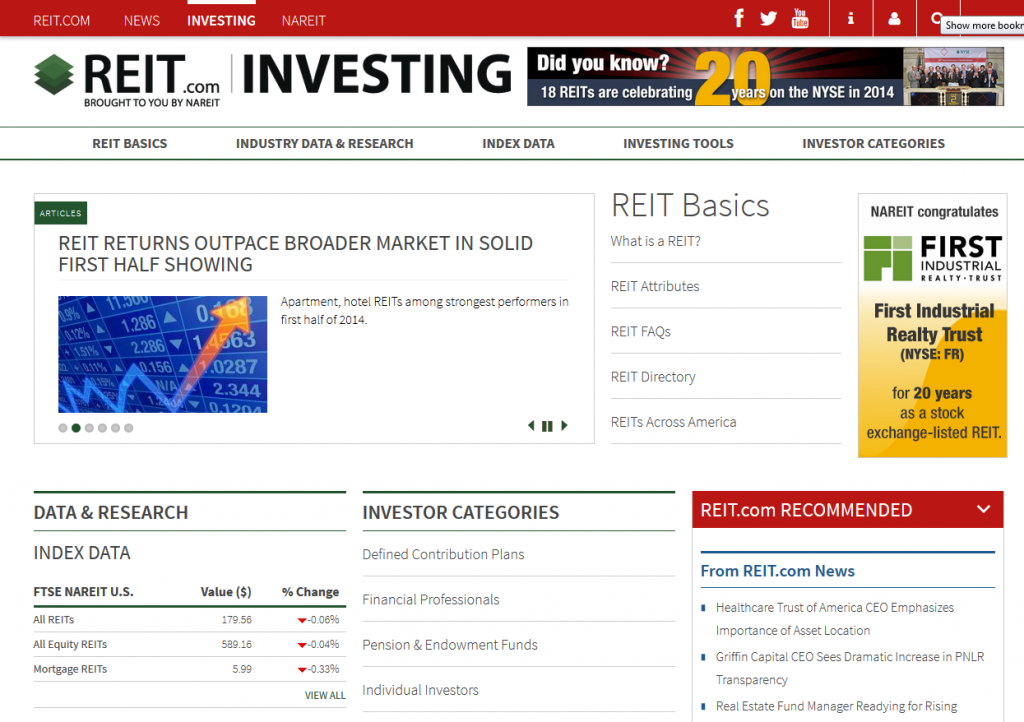
REIT.com had a piece called REIT Returns Outpace Broader Market in Solid First Half Showing out late last week and the part that caught my eye was the section titled: Apartment REITs Lead the Pack in First Half:
Apartment REITs were the strongest performers during the first half.
Total returns as of July 7 in the sector stood at 23.8 percent.
Click image to view article on REIT.com
“There was increasing comfort in the market that fundamentals in the [apartment] sector were not decelerating as fast as many had feared,” said James Sullivan, managing director at Cowen & Co.
Apartment REIT managers are some of the best multifamily operators in the world and it pays to pay attention to what they’re doing. Unfortunately the returns on REIT shares are too often driven by capital flows from the stock market rather than the pure performance these managers generate. Patient contrarian investors can be rewarded however by waiting for apartment REITs to fall out of favor with stock market investors and pick them up at bargain prices.
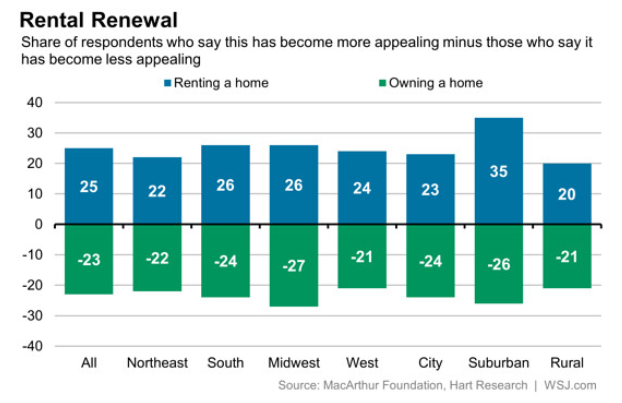
A MacArthur Foundation survey conducted by Hart Research Associates shows that 70% of Americans polled think that the housing crises isn’t over and 19% think the worst is yet to come, good for apartment building investment I believe. As reported by the Wall St. Journal in an article titled: Allure of Homeownership Slumps Amid Worries of Continued Crisis the worst is yet to come figure is unchanged from last year, which may reflect a segment of the population that has been deeply scarred by collapse of the lending and housing bubbles. The still in the crises figure is down from 77% a year ago but it is still a big number that’s having a positive effect on apartment demand:
Wrapping up in the office on this last day of 2013 and wanted to share some things that have been twitching my antennae lately:
The Taper, actually a Malayan Tapir Source: www.konicaminolta.com
While there’s been a lot of ink/bits spilled over a slight and possibly temporary ‘taper’ in the Fed’s bond buying spree known as QE to Infinity! the one thing they have been unequivocal about is their intention to hold interest rates low (read: near zero) for an extended period that has now been stretched out as far as 2017. Meanwhile ‘everyone knows’ interest rates are going up.
Which will prevail? The Fed has been pretty successful at forcing them down and holding them there for years, going on 14 if you start counting from the dot com crash. On the other hand if everyone knows rates are going up they will act accordingly and that will tend to push rates up, at least long rates which the Fed has less control over. For a very interesting take on how to deal with what ‘everyone knows that everyone knows’ see Ben Hunt on Epsilon Theory.
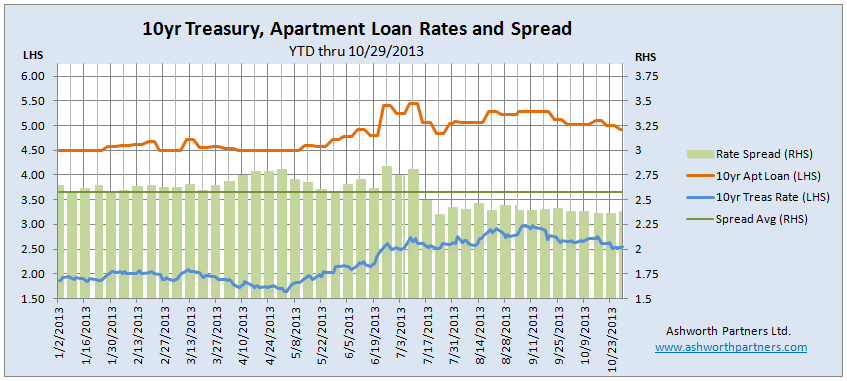
In more good news for apartment building investors, both the 10 year Treasury and apartment loan rates have moderated since the Fed’s “non-taper” announcement in mid-September. The spread between the T10 and the 10 year apartment loan rate we track has come in as well. Since 9/16 the Treasury has drifted down from 2.88% to yesterday’s quote of 2.53% while the loan rate has moved from 5.282 down to 4.921, bringing the spread in to 2.381 from 2.402. The average spread for 2013 has also narrowed to 2.573%: