Why it’s good news that more Americans are renting rather than buying homes. Via Slate. Good for #Multifamily
Filed under: Multifamily Investments, The Economy and Current Affairs
Exec Sum:
The American economy is making a significant shift from buying to renting, and that may ultimately be good news. According to a USA Today analysis of Census data released this weekend, since 2006, the number of households that rent has grown by about 700,000 a year, while the number of households that own has fallen by about 200,000 a year.
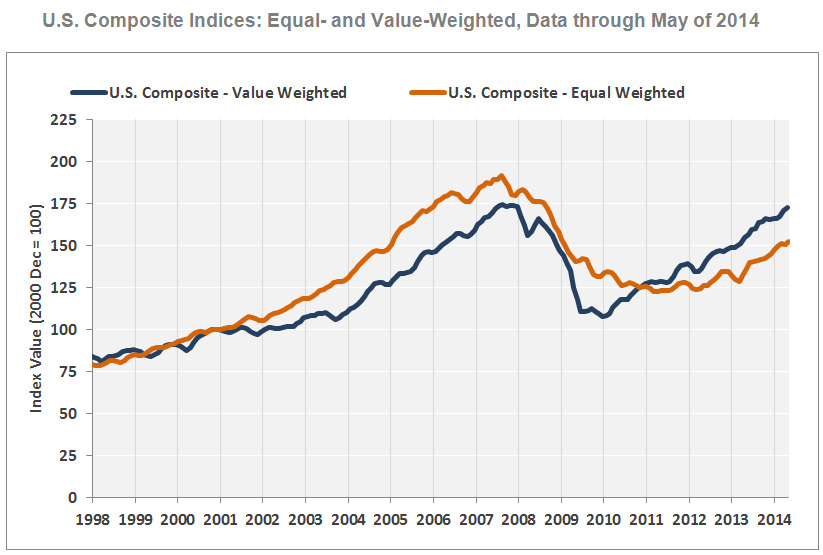
[R]enting is better than owning for many Americans. Indeed, dozens of recent studies have shown that, excepting the go-go bubble years, houses tend not to make very good investments at all: A prospective homebuyer would have made more money taking her down payment, parking it in inflation-adjusted Treasury bonds, and renting.
But it is conclusive: Not everyone should own a home. The recession has helped erode the stigma against renting, with about 70 percent of Americans now admitting that it has advantages over buying a house. If people are making unsentimental decisions about whether homeownership is really worth it for them, that is at least one small benefit of the housing bubble bursting.
See the whole article with links to reports and surveys here: The Rent Isn’t Too Damn High
Seattle Area #Multifamily Report now posted on Reis Reports- Caps flat, rents mixed but vacancy down
Filed under: Commercial Real Estate, Multifamily Investments
See the report here: http://bit.ly/xm8uUG
Supply Shortage Continues in Multifamily. Apartment vacacny lowest in 11 years.
Filed under: Commercial Real Estate, Multifamily Design & Development, Multifamily Investments
From WSJ Developments-
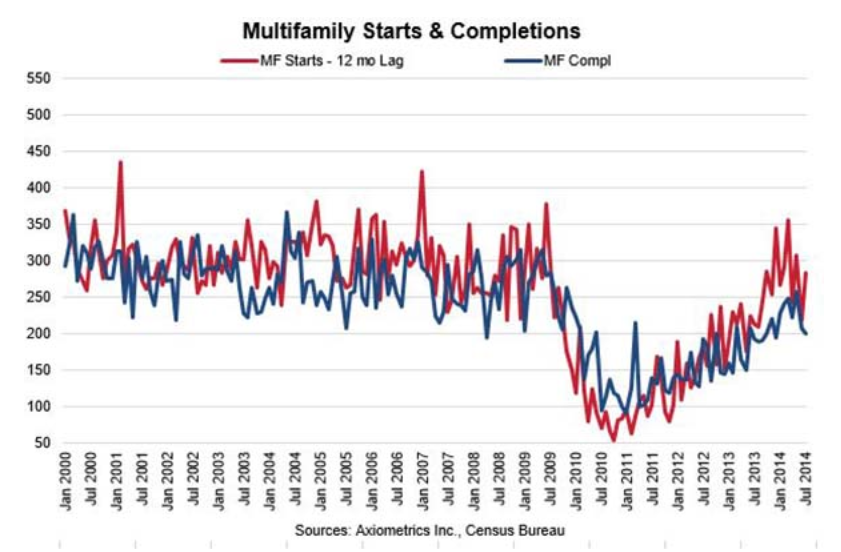
Little new apartment construction and surging demand has created a shortfall of 2.5 million units, the largest the nation has seen in more than a half-century, according to research from Nareit, a trade group for real-estate investment trusts.
As we’ve reported, apartment landlords are seeing vacancy rates decline as more Americans rent by choice or necessity. In the fourth quarter, apartment vacancy fell to the lowest rate since late 2001, with the national rate dropping to 5.2% from 6.6% a year earlier, according to Reis Inc. The vacancy rate had risen as high as 8% in 2009.
Pent-up demand could pull that rate even lower. According to Nareit, the normal rate of household formation is about 1.2% annually. But, with the sour economy in the last four years, the rate plunged to about 0.5%, as people delayed moving out and opted to live with roommates and parents longer. This has created an unmet demand of about 2 million households, “about three times what it has been in previous business cycles,”… See the whole article here
The #Multifamily Asset Twilight Zone: In default but payments still being made. Opportunity or? Via @rshall03
Filed under: Commercial Real Estate, Multifamily Investments
A common theme adopted by the industry is that lenders continue to delay action on distressed assets for as long as possible.
The fact is that this scenario is borrower-specific. If a borrower is acting in good faith, the lender may allow the asset to continue operating, resulting in a commercial property “Twilight Zone.”
The Twilight Zone is made up of properties on which loans have defaulted or in which default is likely imminent, but the borrower is still willing to provide all available cash flow to the lender, even if it is not enough to cover the payments. The lender agrees to accept net rents and, in turn, keeps the building operational, albeit in a limbo period.
When the lender does finally pull the plug value opportunities can Read more
Is Gen Y your target demographic for Multifamily? Here’s why
Filed under: Commercial Real Estate, Multifamily Design & Development, Multifamily Investments
Gen Y—those between the ages of 16 to 33—represents about 25 percent of the population in the country and is now larger than the baby boomer generation, which is shrinking
The Gen Y group keeps getting larger for a number of reasons, including the fact that immigrants to the United States typically come as young adults—and rent. This group is expected to continue to expand over the next 15 years.
Through 2017, she adds, there are going to be more than 4.3 million people turning 22 each year (though analysts used to use 18 as the age people left home, young people have delayed forming new households). This number is expected to remain above 4 million until 2025. And, of course, fewer people looking to purchase a home also bodes well for the multi-housing industry.
See the whole article at: Gen Y for Multifamily on MHN Online
Portland unemployment drops to lowest in 3 yrs. Good for #Multifamily Via @hfo_apt_brokers
Filed under: Multifamily Investments, The Economy and Current Affairs
The Oregonian reports data from the state employment department about the Portland-area’s unemployment level falling to 8.6 percent, its lowest in three years.
Meanwhile, most people are still unaware of a report issued last month by the Oregon Employment Department forecasting an 18 percent increase in employment statewide in the coming decade. See the post here: http://bit.ly/yxMb1y
Thanks to Greg Frick at HFO in PDX
Seattle Multifamily market cycle peaking or just taking a breather?
Filed under: Commercial Real Estate, Multifamily Investments, The Economy and Current Affairs
In his Q4 report on the Seattle multifamily market ARA’s Jim Claeys says:
Vacancies and Concessions UP
Absorption and Rents DOWN
New Construction Pipeline UP 140% from year ago
Also Home and Condo Sales UP 41, 70% respectively
Sounds kind of like the cycle is moving to the next phase doesn’t it? See the whole article here: This may be a good time for developers to reassess their projections
Hoisington Quarterly Review and Outlook “Recession in 2012″.
Filed under: Multifamily Investments, The Economy and Current Affairs
Housington Investment Management runs about $4B in fixed income institutional money so they pay very close attention to the economy, government as well as fiscal and monetary policy. In fact Dr. Lacy Hunt, co-author of the report, is one of Mauldin’s most highly regarded economists. Here’s the exec sum (see the whole article at http://bit.ly/wM9DIY):
High Debt Leads to Recession
As the U.S. economy enters 2012, the gross government debt to GDP ratio stands near 100% (Chart 1). Nominal GDP in the fourth quarter was an estimated $15.3 trillion, approximately equal to debt outstanding by the federal government. In an exhaustive historical study of high debt level economies around the world, (National Bureau of Economic Research Working Paper No. 15639 of January 2010, Growth in the Time of Debt), Professors Kenneth Rogoff and Carmen Reinhart [Again with those two!] econometrically demonstrated that when a country’s gross government debt rises above 90% of GDP, “the median growth rates fall by one percent, and Read more
Record Rent Growth & Q4 Demand in Dallas/Fort Worth Multifamily Markets: Video
Filed under: Multifamily Investments, The Economy and Current Affairs
Year-over-year rent growth reached a two-decade high in the Dallas/Fort Worth apartment market. And demand in 4th quarter — typically a slow leasing period — was unusually strong.Record Multifamily Rent Growth in DFW
The Apartment Building Investment Triple Opportunity Is Right Now
Filed under: Multifamily Investments, Value Investor's Guide to Apartment Buildings
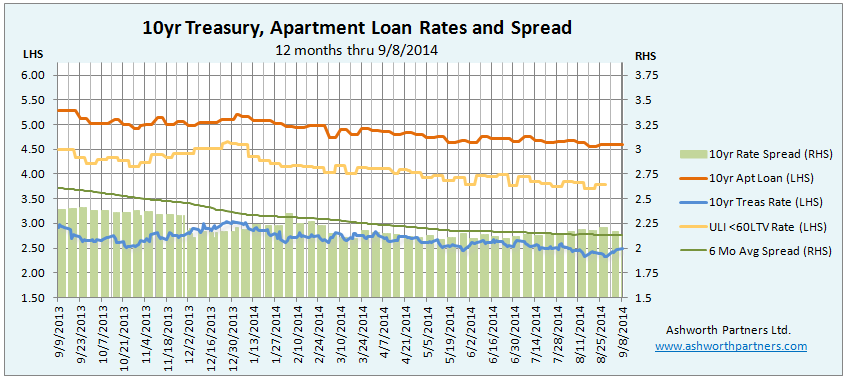
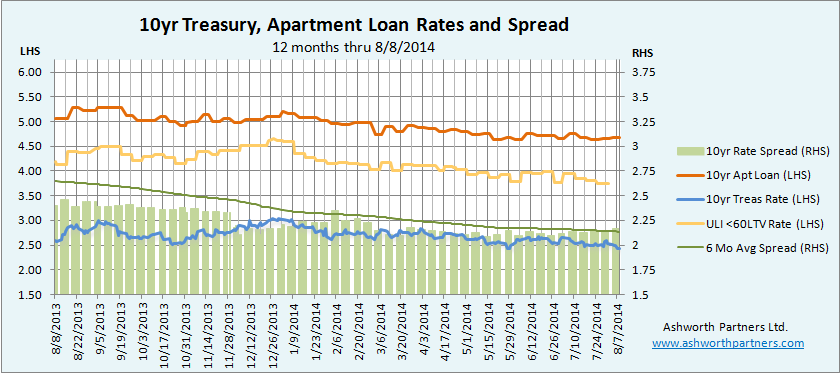
For value investors, Demand, Supply and the Cost of Acquisition are the three factors affecting the apartment building investment decision and all are saying the time to buy is now. There is a tidal wave of new renters coming into the market and there has been little apartment construction to meet this growing demand. Outside of the gateway cities the prices of existing apartment buildings remain below the cost of building new. Fixed rate financing is available for apartment buildings at rates lower than we will see again for years if not decades.
“The multifamily sector is probably the only commercial real estate sector that has very positive fundamentals behind it,” said Jeffrey Baker, managing director at Savills LLC, a real estate investment bank that raises capital for multifamily owners and developers. “You’ve got a demographic that is producing more households that want to rent an apartment. You’ve got virtually no new supply that’s been added over the last several years.”1 Read more